
1920sWALTER P. CHRYSLER WITH ORIGINAL 1924 CHRYSLER SIX
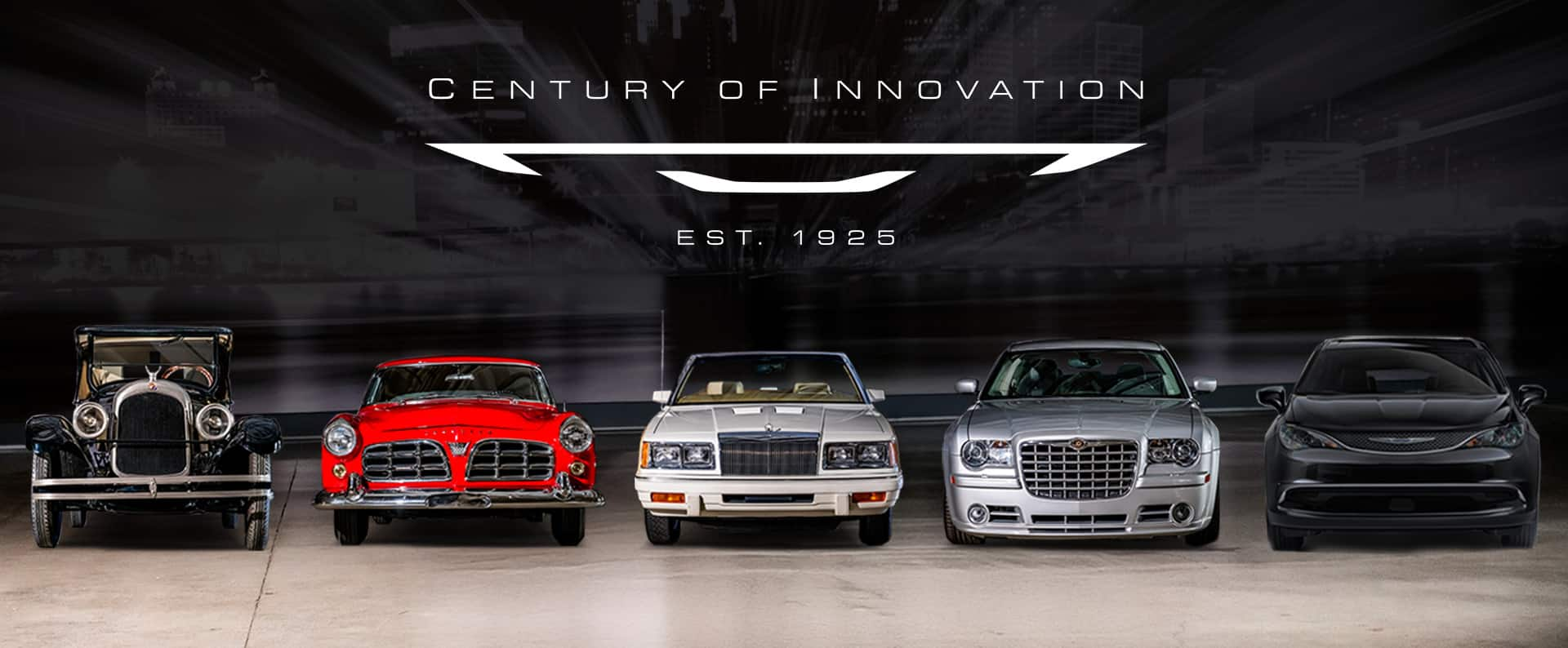
1920-1925: The Chrysler company was founded by Walter Chrysler on June 6, 1925, when the Maxwell Motor Company (est. 1904) was reorganized into the Chrysler Corporation. Chrysler teamed up with three ex-Studebaker engineers, Fred Zeder, Owen Skelton and Carl Breer, to further car innovation with a revolutionary new vehicle. They defined what the products of the Chrysler Brand would be. We’ve been innovating since then, producing affordable "luxury" vehicles known for innovative, top-tier engineering. 1924: In 1924, Chrysler introduced the Chrysler Six, an all-new vehicle priced at $1,565 that featured two significant innovations—a light, powerful, high-compression six-cylinder engine and the first four-wheel hydraulic brakes to come standard on a passenger car. The well-equipped Chrysler Six also featured aluminum pistons, replaceable oil and air filters, full-pressure lubrication, tubular front axles, shock absorbers and indirect interior lighting.
1930s1934 CHRYSLER AIRFLOW
1930-1935: Within a decade of its founding, Chrysler introduced a series of revolutionary automotive features including Floating Power engine mounts (a new method of mounting engines to isolate vibration), replaceable oil filters, downdraft carburetors, safety-rim wheels and one-piece curved windshields. These innovations and more helped earn the Chrysler Corporation the label of Detroit's "engineering company." Chrysler entered a higher level of competition with its regal Imperial series. With a custom-built body from LeBaron or Briggs, a 145-inch-wheelbase chassis, a 125-horsepower engine and a price tag of $3,145, a typical Imperial of the early 1930s rivaled a Duesenberg in style but cost only about a third as much! The Chrysler Airflow, pictured here, brought even more attention to the company with its introduction in 1934. This stylistic yet affordable approach would help go on to define Chrysler for generations to come.
1940s1940 CHRYSLER THUNDERBOLT CONCEPT
1941: The Chrysler Thunderbolt Concept, pictured here, was just one of the ways in which Chrysler reimagined automotive design for the future. By 1949, Chrysler vehicles were one of the first to have "safety cushion dashboard" the famous Chrysler push-button transmission (which later became an icon of the 50s), power steering and a torsion-bar suspension.
Chrysler then reaffirmed its engineering reputation by commissioning a revolutionary gas turbine engine program. This 27-year campaign to put an aircraft engine turbine's smooth power and low maintenance requirements into an automobile became part of Chrysler folklore.
1950s1957 CHRYSLER 300C
1950: A big indication of changing times at Chrysler came with the 1950 development (and enthusiastic reception) of the authoritative FirePower V8 engine. Soon to be known as the HEMI® V8, this legendary engine combined better combustion, higher compression and lower heat loss to create more horsepower than previous V8 engine designs. Hot on its heels was the fully automatic Powerflite transmission. Starting in 1956, Virgil Exner, head of design, revived Chrysler production design with the sleek, sculptured Forward Look designs of 1955 that transformed the product line overnight, turning what was seen as futuristic vehicles into automotive reality. The Forward Look flagship was the 1955 Chrysler 300, a striking automobile that combined smooth styling with brawny HEMI V8 engine power. The Chrysler 300, arguably the first muscle car, became a legend on and off the racetrack and set records throughout the 1950s, including a 143-mph performance at Daytona Beach. As the 50s progressed, Chrysler products began to sprout distinctive tailfins, ostensibly to improve handling and stability over 70 miles per hour. The 1957 Chrysler Brand standard-bearer, the Chrysler 300C, was equipped with a standard 392-cubic-inch, 375-horsepower HEMI V8 engine, two four-barrel carburetors, a high-output camshaft, a Torsion-Aire suspension and the new TorqueFlite® transmission—making it one of the fastest, most powerful production cars built in America that year and earning it the Chrysler branding "beautiful brute."
1960s1963 CHRYSLER TURBINE
1960-1970: 1960 saw Chrysler introduce the first practical alternator, which proved so successful that it became standard equipment just 1 year later. The Chrysler luxury brand evolved gracefully through the 60s—fins disappeared, large vehicles became more refined and ads for the 1963 Chrysler New Yorker promised that there were "no junior editions to compromise your investment." The 1963 Chrysler 300-J upheld the brand's style-plus-speed image with standard leather interiors, heavy-duty torsion bars and ram induction manifolds. A special-edition Pace Setter convertible version even started the Indianapolis 500. By 1965, Chrysler sales had increased 65%, vaulting the brand from 11th to 9th place in national rankings. 1960s Chrysler car models ranged from the "affordable luxury" of the Newport line (with no fewer than 376 trim and color combinations) through the high-class New Yorker to the sporty Chrysler 300 with its 440-cubic inch V8 engine.
1970s1975 CHRYSLER CORDOBA
1971-1979: One standout design in the rapidly evolving landscape of 1970s Chrysler models was that of the Chrysler Cordoba, a 115-inch-wheelbase coupe billed as "Chrysler's new small car." With its formal roofline and one-of-a-kind rectangular taillamps, it became one of the era's most memorable vehicles—along with the TV commercials in which actor Ricardo Montalban extolled the virtues of its "rich Corinthian leather" interior. Cordoba models sold better than all other Chrysler models combined, inspiring new, "smaller" Chrysler designs like the LeBaron Medallion coupe.
1980s1986 CHRYSLER LEBARON
1980-1987: The automotive "back to basics" era peaked in 1984 with the introduction of the industry’s first minivan segment.
The design highlight for the Chrysler Brand of this era was unquestionably the LeBaron convertible, which reintroduced the convertible to American drivers and enjoyed a 9-year run of bringing style and excitement back to the brand.
In the late 1980s, new leadership at Chrysler was determined to return the brand to its roots of engineering and design excellence. They decided to create an entirely new line of "Euro-Japanese-ethic" cars, then developed platform teams to get the job done quickly and affordably. This new product philosophy was reflected in the development of concept vehicles like the 1988 Portofino and the 1989 Millennium.
1990s1991 Chrysler Town & Country and 1993 Concorde
1988-1998: The Chrysler Brand's renaissance began in earnest with 1990s Chrysler models like the midsize 1993 Concorde sedan. This was quickly followed by the full-size LHS, the full-size Chrysler 300M, the smaller Cirrus sedan, the companion Sebring luxury sports coupe and the separate Sebring convertible.
The Chrysler Corporation's most practical vehicle proved to be its most popular and eventually led to the revival of the Chrysler Town & Country nameplate on an upmarket version. In the 1990s, the next-generation Chrysler Town & Country minivan only further cemented the vehicle's crucial place in our history.
2000s2005 Chrysler 300
2005: The new millennium ushered in a decade of innovation and design accomplishments for Chrysler. Most notable was the launch of the iconic Chrysler 300C, the latest generation in a long pedigree of champion Chrysler 300 models built for peak driver excitement since 1955. When it was launched in 2005, the stunning Chrysler 300C turned the attention of the automotive world back to Detroit and reignited passion about great American design. In 2023, the Chrysler 300 officially ended production after helping to define our legacy for nearly 2 decades.
But the Chrysler 300C wasn't the only shining example of Chrysler design refinement in the decade. The introduction of the PT Cruiser fused modern amenities with a retro sensibility, romanticizing an era of hot rod Model A wagons. The decade also saw a remarkable reinvention of the flagship minivan by the people who invented it. The brand's family anchor—the Chrysler Town & Country—received a host of technology and safety innovations, cementing its status as the family van benchmark in the new millennium and beyond.
Chrysler was founded on the philosophy of design with purpose—to build revolutionary, affordable luxury vehicles known for their innovative, forward-thinking engineering. That remains our purpose today and for tomorrow: to develop new technologies and advanced engineering solutions that further our mission. To create the type of exciting, efficient, reliable and safe vehicles and minivans that our drivers expect and deserve.
2010s2011 Chrysler 200 and 2012 300C SRT8®
2012: The 2010s saw vital growth for the Chrysler Brand, with the 2011 release of the Chrysler 200 kicking things off. The vehicle's luxury features and diehard legion of fans made it an important addition to the brand's rapidly-changing lineup.
Then, in 2012, the Chrysler 300C SRT8® wowed drivers and critics alike. As part of our legendary Street and Racing Technology lineup, the SRT8 built upon the foundation of the Chrysler 300C and amplified the performance to a whole new level. With an incredible 425 horsepower and 420 pound-feet of torque, this sedan was more than just good looks. In fact, it was one of the first times an automaker dared to combine high-end luxury and elite performance at a reasonable sticker price.
2016CHRYSLER PACIFICA
2016: A new era of the minivan dawned in 2016, not only for the FCA US LLC, but also for the automotive industry as a whole. With more than $2 billion invested in its design and development, the Chrysler Pacifica was built from the ground up to be a striking, family-friendly vehicle unlike any that American roads had seen.
The exterior of the Chrysler Pacifica features a sleek, sculpted design inspired by the sportier look of contemporary Chrysler Brand vehicles. Inside, a host of comfort and convenience features were engineered with the family in mind. All in all, the Chrysler Pacifica minivan features more than 37 segment firsts.
In just its first year of production, the Chrysler Pacifica family van was the recipient of several industry awards, including "Best Minivan of 2016" as named by Cars.com.
2017CHRYSLER PACIFICA PLUG-IN HYBRID
2017: The Chrysler Brand continued its long history of innovation when it launched the Chrysler Pacifica Plug-in Hybrid back in 2017—America's first and only Plug-in hybrid minivan. Featuring many of the same features that made the gas-powered Pacifica so popular, the Chrysler Pacifica Plug-in Hybrid generated an astounding 520-mile total driving range and a 32-mile all electric range. It was one of the first automobiles designed to be both fuel-efficient and large enough to tackle the demands of the modern growing family.
20212021 CHRYSLER PACIFICA
2021: The 2021 Chrysler Pacifica minivan introduced an advanced All-Wheel-Drive (AWD) system, 14 newly-standard safety and security features, a more athletic exterior redesign and an elegant, incredibly versatile interior with the Stow 'n Go® Seating and Storage System—standard in the third row—which allows passengers to fold seats effortlessly into the floor of their vehicle with the push of a button.
The Chrysler Pacifica is the only vehicle to offer both AWD and the Class-Exclusive available Stow n' Go Seating and Storage System, and stands above the competition with the introduction of the elite 2021 Pinnacle model—offering the most luxurious interior in its class.
THE FUTURETHE HALCYON CONCEPT VEHICLE
Moving forward: 2024 saw the Chrysler Brand once more using unbound imagination and forward-thinking vision to create something truly extraordinary. The Chrysler Halcyon Concept embodies a fully-electrified future for the brand, embracing a sustainability-driven exterior and an interior redesign that changes how passengers both move within their vehicle and stay in sync with it when they’ve stopped driving.
Fully autonomous systems paired with personalized driving experiences and futuristic technology expand the brand's ethos of Harmony in Motion™ by allowing drivers to seamlessly integrate their daily schedules with their vehicle. After 100 years, our future has never looked brighter.
Concept vehicle. Not available for purchase.
EXPLORE OUR MODERN-DAY ICONS
Every Chrysler Brand vehicle is fueled by a century of revolutionary design, cutting-edge innovation and driver satisfaction. Find the minivan vehicle that unlocks your family’s in-motion mobility.